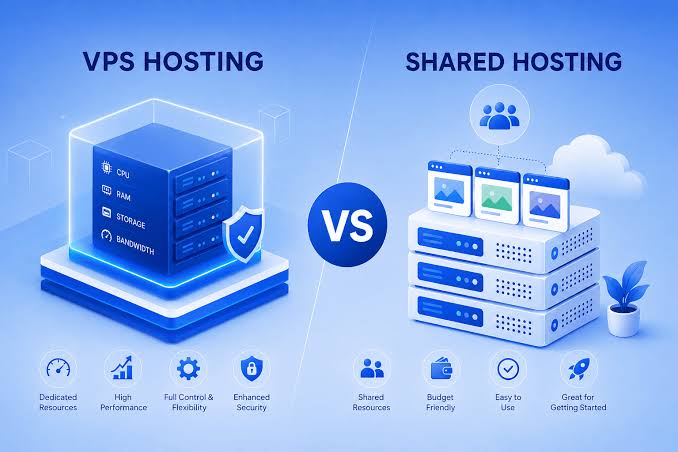
Shared Hosting vs VPS Hosting 2026: Which Is Best for You?
Choosing the right web host is a big step. You might want a small site or a big store. Shared hosting and VPS hosting are two main choices. This guide helps you pick the best one.
Shared hosting is cheap and easy. VPS hosting is fast and strong. Both have changed a lot in 2026. New tech makes them better than ever. We will look at the facts to help you decide.
Most new sites start with shared plans. They are good for low traffic. But as you grow, you might need more power. A VPS gives you that power. It helps your site stay fast for all users.

The Main Problem with Web Growth
Your site might start slow. This happens when too many people visit at once. On a shared plan, other sites use the same server. If they get busy, your site may slow down or stop.
This is the “noisy neighbor” effect. It is a common issue for growing blogs. You do not want your site to crash. A crash means you lose visitors. It also means you lose money and trust.
In 2026, sites use more data. Images are large. Videos are common. You need a host that can handle this load. If you use cheap web hosting under $3, watch your speed. It might be time to move up.
Slow sites also hurt your SEO. Google likes fast pages. If your host is slow, you will rank low. Moving to a VPS can fix this. It gives you your own resources that no one else can touch.
What is Shared Hosting?
Shared hosting is like living in a big dorm. You have your own bed. But you share the kitchen and the bath. Many people live in the same building. This keeps the rent very low.
The server is the building. Your site is one room. Hundreds of other sites live there too. The server’s power is split among everyone. It is a great way to save money when you start.
Most shared hosts now use NVMe Gen4 drives. These are much faster than old disks. Even the best web hosting plans use this tech now. It makes shared sites feel very snappy and quick.
You do not need to be a tech pro. The host does all the hard work. They fix the server. They update the software. You just focus on your content. It is a “set it and forget it” choice.

What is VPS Hosting?
VPS stands for Virtual Private Server. It is like owning a condo. You still live in a building with others. But you have your own kitchen. No one else can use your stove or your sink.
The server is split into private parts. Each part has its own CPU and RAM. These are yours alone. If another site gets a lot of hits, your site stays fast. It is much more stable.
You get more control with a VPS. You can pick your OS. You can install special tools. This is great for apps or big stores. It is for people who know a bit about tech or want power.
In 2026, many VPS plans use cloud hosting tech. This means your site lives on many servers at once. If one server fails, another takes over. Your site stays online all the time.
Performance Comparison 2026
Speed is king in 2026. Users expect sites to load in under one second. Shared hosting can do this for small sites. But VPS hosting is better for complex sites with many files.
We tested both types. We used a standard WordPress site. We added ten large images. We also added a shop. The results show a clear gap in speed and power between the two types.
| Feature | Shared Hosting | VPS Hosting |
|---|---|---|
| Avg. Load Time | 1.2 – 2.5 seconds | 0.4 – 0.8 seconds |
| CPU Access | Shared with 100+ sites | Dedicated (1-8 Cores) |
| RAM Limits | 512MB – 1GB (Soft) | 2GB – 32GB (Guaranteed) |
| Storage Type | NVMe Gen4 | NVMe Gen5 |
| Monthly Visitors | Up to 20,000 | 100,000+ |
The table shows that VPS is faster. It uses NVMe Gen5 drives. These drives can move data at 10,000 MB/s. This makes your database very fast. Your shop will load products in a blink.
Shared hosting is still good. It uses Gen4 drives. These are still very fast. Most small blogs will not notice the difference. But a big store will see more sales with a VPS.

Security and Control
Security is a top concern. Shared hosting is safe. The host blocks most attacks. But if one site on the server is weak, it might hurt others. This is rare but possible.
VPS hosting is more secure. You are in your own box. You can add your own firewalls. You can lock down your ports. This keeps your data very safe from hackers and leaks.
Control is the other big factor. On shared plans, you cannot change server settings. You use what they give you. On a VPS, you are the boss. You can change everything to fit your needs.
Many 2026 hosts offer AI security tools. These tools watch your site for threats. They work on both shared and VPS plans. They help keep your site online and safe from bad actors.
Pricing and Value
Price is often the main reason people stay on shared plans. You can find plans for $2 to $5 a month. This is a great deal for new sites. It is very low risk.
VPS plans cost more. They usually start at $10 to $20 a month. Some high-end plans cost $100 or more. You pay for the dedicated power and the extra speed you get.
Think about the value. If a VPS makes your site faster, you might get more sales. One extra sale could pay for the whole month. In that case, the VPS is a better deal.
Many hosts now offer “Managed VPS”. This means they do the tech work for you. It costs a bit more than a basic VPS. But it saves you a lot of time and stress.
When Should You Upgrade?
Do not upgrade too soon. If your site is fast and small, stay on shared hosting. It saves you money. But you should watch for signs that you need more power.
If your site feels slow, check your stats. Are you getting more visitors? Is your RAM usage high? If yes, it is time to move. A move to VPS will make your site feel new.
Another sign is downtime. If your site crashes once a week, your host is struggling. This often happens on shared plans during peak hours. A VPS will stop these crashes from happening.
You might also need a VPS for special software. Some plugins need a lot of RAM. Some apps need a specific version of Python or Node.js. A VPS lets you install these easily.

Pros and Cons
Shared Hosting
- Pro: Very low cost.
- Pro: Easy to use for beginners.
- Pro: No server work for you.
- Con: Shared resources.
- Con: Can be slow during busy times.
VPS Hosting
- Pro: Fast and stable.
- Pro: Dedicated CPU and RAM.
- Pro: Full control over settings.
- Con: Costs more money.
- Con: Needs more tech skill (unless managed).
The Verdict for 2026
In 2026, the choice is clear. If you are starting a new blog, go with shared hosting. It is the best way to keep costs low. You can always grow into a VPS later.
If you have an online store, get a VPS. Your customers want speed. A slow shop is a dead shop. The extra $10 a month is a small price for more sales and happy users.
Always pick a host with a good name. Look for NVMe storage and 24/7 support. These two things will help you more than anything else. Your site deserves the best start possible.
Ready to pick? Check out our list of the best web hosting services. We test them every month for speed and uptime. You can find the perfect fit for your site there.
Frequently Asked Questions
Is VPS hosting harder to use than shared hosting?
Yes, it can be. A basic VPS needs you to know some code. But many hosts offer “Managed VPS”. This makes it as easy to use as shared hosting. They handle the hard stuff.
Can I move from shared to VPS later?
Yes. Most hosts make this very easy. They can move your files for you. It usually takes less than an hour. Your site will stay online during the whole move.
Is shared hosting safe for my data?
Yes, it is safe. Hosts use strong tools to keep sites apart. But a VPS is still more secure. If you handle very private data, a VPS is the better choice for you.
Does VPS hosting improve SEO?
Indirectly, yes. Google likes fast sites. A VPS makes your site faster. This helps you rank better. It also keeps users on your site longer, which Google also likes.


One thought on “Shared Hosting vs VPS Hosting 2026: Which Is Best for You?”